Do people lose money by taking Home Loans/Mortgages – Part 1

There is this notion most of the people who are starting out in their jobs, have. “Once my salary becomes big enough, let me take a home loan and get settled down in life. Why pay rent to somebody else?” After all, having your own nest, and providing shelter to your family, is an innate desire most creatures are born with. Birds build nests, for example.

Let’s dive into what are the implications of this wrong idea, most of us are either born with, or are directly or subconsciously taught. Assuming, some of you are in a decent paying job, where you can save enough to comfortably pay prospective home loan EMIs, today or in the near future, should you buy that house you dream of? If yes, what is the ideal time to buy it?

Taking a home loan is the exact opposite of how Robert Kiyosaki defines an asset. An asset is an investment vehicle that puts cash in the hands of it’s owner. Conversely, a leveraged property takes away cash out of your pocket, every single month. Notice how he puts mortgage under liabilities/expenses.

Balance sheet of salaried class

To make things simple, let’s suppose you have a friendly next door home loan lender who offers you a 100% loan (no down payment) on a sexy new flat in the neighbourhood that has caught your eye. Moreover, he tells you, hey you can pay me just the interest for now and at the end of 20 years, you can sell the flat and repay me the principal.

  • Cost of flat – ₹ 1 Crore
  • Rate of interest – 10% per annum, fixed, for the next 20 years.
  • EMIs per year – 10 Lacs
  • Rental yield – 3% per annum with a 5% escalation every year
  • To simplify, I have ignored tax savings from the home loan because without a home loan, one can still save taxes using HRA and other 80c deductions.

So your cash outflow would be 2 Crores, over 20 years.
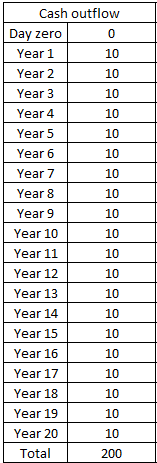
Table 1 – Cash outflow (in lacs)

From this outflow, let’s deduct the rentals you’d save by staying in the flat. Annual rental yields in most cities are in the range of 2-5%. I’ll take 3% (25k a month in year 1) as the average rental yield, with a 5% escalation per annum.
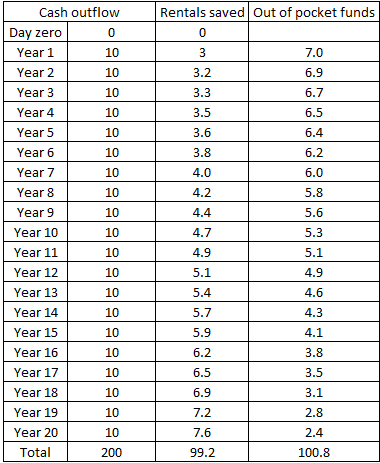
Table 2 – Cash outflow (in lacs) after factoring in rentals saved.

From the outflow of 2 Crores, you’d have saved 1 Crore towards rentals, that you’d have paid, had you chosen NOT to buy that flat. So after factoring in rentals saved, your actual out of pocket funds are 1 Crore rupees.

But hey there’s a catch. Bring in the aspect of future value of money aka opportunity costs aka compound interest.
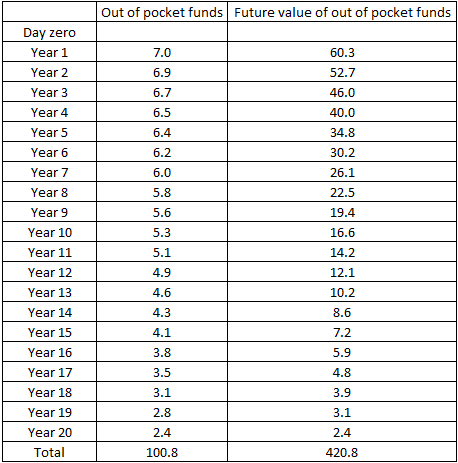
Table 3 – Future value of out of pocket funds

So, had you chosen to NOT buy that flat and put that money into a mutual fund SIP which earned you just mediocre 12% returns per annum, your opportunity costs would work out to 4.2 Crores. Effectively this means that the flat that is selling for 1 Crore today needs to sell at least for 5.2 Crores, 20 years later, for it to break even with returns from a 12% earning mutual fund SIP. I would imagine, that a 20 year old flat will sell for 5.2 Crores, in 2040, would be considered wishful thinking.

Now let’s come back to the real world. Why does it not make sense, on average, to take a home loan at 8%? Because rental yields is India are a paltry 3-4% per annum whereas home loan interest rates are, on average, 8% and above. Effectively, this means, the market value of your flat needs to appreciate by at least 4-5% per annum (8% interest rate minus 3% rental yield) in order to cover the interest costs of that home loan. Anything above and beyond this 5% is your gain. If it doesn’t appreciate above this 4-5% threshold, you’ve incurred permanent loss of capital.

The idea is to NOT ignore invisible opportunity costs just because those are not out of pocket costs and just because they don’t show up in your mental balance sheet. The invisible sometimes matters a lot more than what is seen. The invisible is like the dog that did not bark in the famous Sherlock Holmes story.

I can already hear some of your psychological arguments against the idea of not buying a house.

  • What if I lose my income stream some day? Well this holds good even if you were to have that home loan on your head. Without income, one may still struggle to pay their monthly rent. Conversely, one is more likely to be better off with a lot of liquid investments, which are a result of prudent investing, over time. And these investments happened because one did NOT get suckered into that sweet home loan deal.
  • There’s an emotional value attached to an “own house” that one will probably not experience in a rented house. I agree. But then, this emotion comes at an invisible cost attached to it. Think of all the things that your family could otherwise do, with all the money that you’d earn by putting money into a mediocre SIP which earns just 12%. And here I have taken 12% instead of the benchmark 15%, which is expected from equity mutual funds in India.

Another idea that gets conveniently ignored, when buying a house was articulated by Warren Buffett several years ago.

The above quote means you should always have cash available (loaded gun) to take advantage of opportunities, as and when, panicked sellers of assets (rare, fast-moving elephants) present you lucrative opportunities. With ample cash, one can always take advantage of panic sellers, when they rarely show up at times such as 2008-09 (Global Financial Crisis), the IL&FS crisis which led to a crash in Banking stocks in Sep-Oct 2018, or March 2020 (Covid-19 crash). Or one could also buy real estate with their own funds when real estate prices tanked for a little while, in March 2020. But how will you take advantage of fearful sellers if your ammunition has already been sucked up by home loan EMIs?

Personally I disposed off my only flat in 2012 because most of my life’s savings were in it and it’s price hadn’t kept pace with the interest on home loan being charged by my bank, for six years. When it was time to cut losses in my property, I simply followed Philip Fisher’s advice, who said this about money managers, who let their losses run.

I cut my losses, in that property, took the money from that sale and put some of it into a business and some of it into equities. And, it worked out better than I had expected. My family was initially reluctant with the idea of selling our first “own house” and some of my well wishers must have thought I’d gone bonkers to go against conventional wisdom, which was to keep paying interest on that home loan and hope for it’s market price to catch up with whatever I had already paid/would pay the bank in the near future. The same flat’s market price has not even doubled between 2012 and today, while my portfolio has done way better than that, both, before and after the covid19 flash crash.

That being said, in my view, the ideal time to buy a house is when you can buy it with 20% of your total corpus and with no help from any mortgage lender. The kind of mental comfort this kind of an arrangement can give you is difficult to explain in words.

Let’s talk about survivorship bias now. In an alternate universe, I might have been a trader who punted commodities on the London Metal Exchange or a guy who lost all the money he got from selling his house, in leveraged futures and options trades. In part, I was lucky to have read the right kind of people. I have a really bright friend who started about 2-3 years back and joined some day trader’s online course and is yet to break even. He eventually lost interest in the markets (at least temporarily), thanks to occasional losses and mounting responsibilities as he moved up the corporate ladder. My guess is he would have prioritised investments over his career, had he tasted success in the markets, by having chosen the right kind of mentors, when he started. And it wasn’t that he was not focused on learning technical analysis. He was. Just that he might not have found the right kind of mentors. My take away was to be careful about who you listen to. A mistake a lot of bright people in every field make, driven by the noise around, is to choose the wrong mentors. It takes 10x more time & effort to unlearn the wrong stuff than to learn the right ideas from the right people. Our brains are just wired that way.

To conclude the first part of this post, the key takeaways are:

  • Keep your monthly cash outflows at bare minimum, by avoiding home loans. Rather stay on rent. Staying on rent is psychologically difficult, yet can be very profitable, in the long run, provided you are financially disciplined.
  • If the market price of your property isn’t appreciating by at least 8%, then you are incurring permanent losses of valuable capital.
  • Buy a house only when you can really & fully afford it with your liquid investments and without a home loan.
  • If you are a DIY investor, choosing the right mentors with long track records and great testimonials is key.

In the next part, I will be covering how I think about asset allocation when it comes to leveraged real estate. Hope this post adds value to your life. Cheers!!

-Barath Mukhi
-12th January 2020

Is low cash balance a red flag for Laurus Labs?

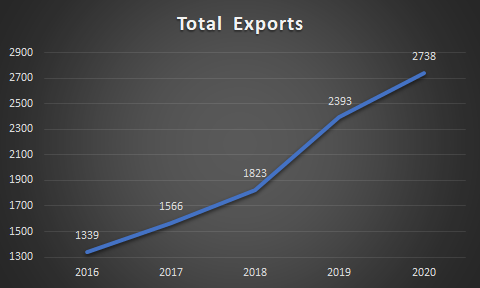
The idea for this post started with a Tweet which claims Laurus Labs’ cash levels are too low for comfort. How can Laurus have just 2-4 Crs of cash at the end of each financial year, despite a healthy TTM topline of 3682 Crs?

Laurus LabsMar 2014Mar 2015Mar 2016Mar 2017Mar 2018Mar 2019Mar 2020Sep 2020
Cash Equivalents23592943322

I think there was room for more deep diving. This analyst from Twitter had more room for giving more weight to other data points that disconfirmed his notion about low cash levels. I have tried to cover those data points below.

Let’s start with the assumption that the guy’s hunch is true. If a business is running low on cash, what are the things you’d typically see?

  • The co’s suppliers would be squeezed for credit, leading to lower operating margins, because suppliers would charge the co. more, for raw materials supplied. In turn, the co’s margins would shrink due to an inability to pass on the increased cost unless they have huge pricing power, which is scarce in the Pharma industry. But surprise, surprise. Instead of margins declining, the co’s margins expanded.
OPM% Chart from Screener.in
  • Given the co’s high sales growth, inventories would have reduced, due to an inability to fund incremental raw material demand. Did inventories decrease? No.
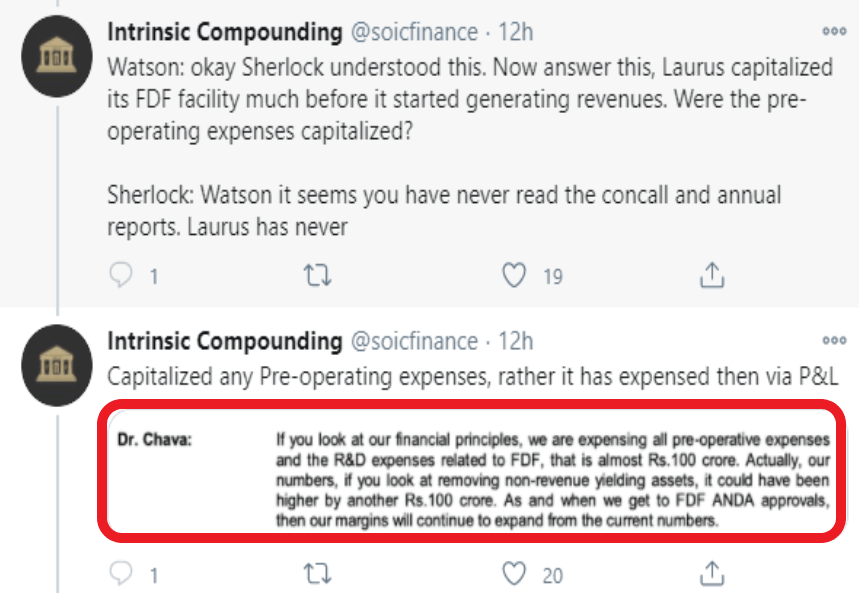
  • Assuming the management was cooking it’s books in order to inflate it’s stock price, what would you see? They would try to maximize profits now, and try to push the expenses to a later date. But here the co. is doing just the opposite. It is taking a hit on current year’s P&L and expensing 100 Crs of R&D before hand. This tells you the accounting practices are not too aggressive. Whereas a stock price focused promoter would do all the things in the world to inflate his profits. This promoter didn’t.
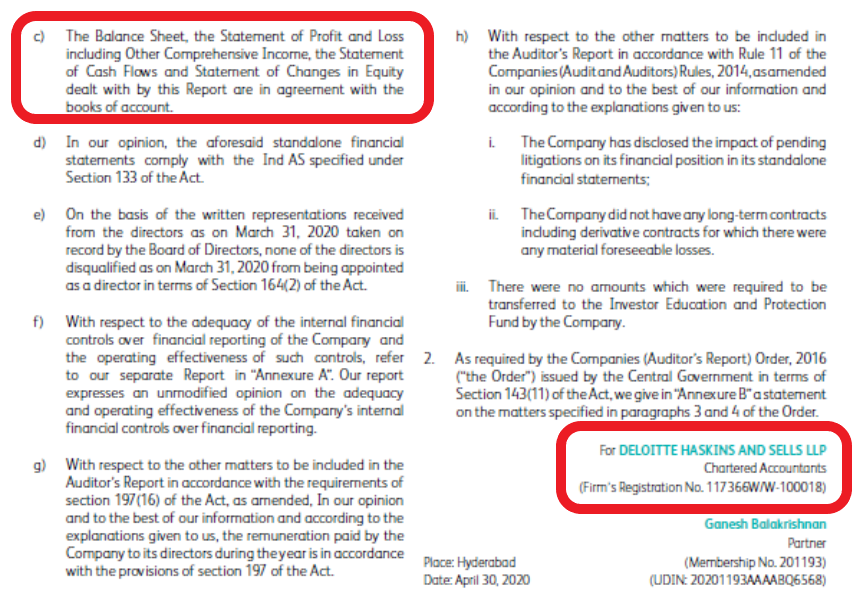
  • Did the co. inflate it’s capex? Did auditors miss to check something important? No, lease agreements were verified by Deloitte. This is in addition to other basic checks and balances on the auditor’s side.
  • Sales would not have grown at this pace, without an increase in debt. It would have still grown, but not at the scorching pace it has. That the co. grew it’s sales at a rapid pace without taking debt in the same proportion tells us something. No?
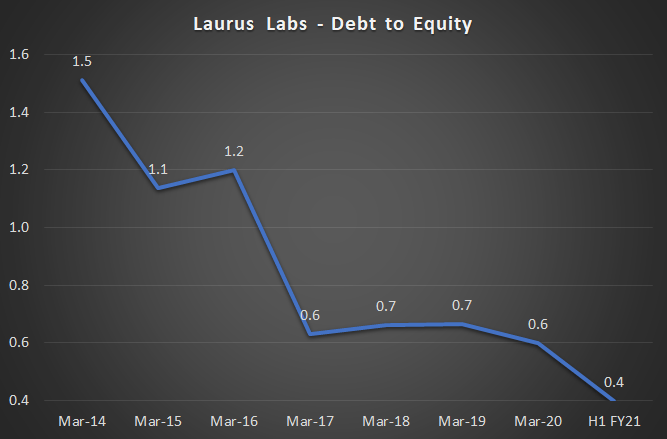
  • One of the things about most of the crooked managers is they take on a lot of debt. If you are a crooked manager, why would you have an all equity capital structure? Wouldn’t you want to maximize funding the business from others money than your very own? You would want gullible banks to lend you all the money they can and put up very little of your own money into the co. If I was a crooked promoter, why would I screw just shareholders and NOT cheat banks too? Higher debt would lead to an increase in debt to equity. In my view, debt free co’s are more likely to be honest than not. If debt to equity is decreasing, it is possibly a step in that very direction. That being said, being just debt free does not guarantee a totally honest promoter. There are no guarantees in equity investing.
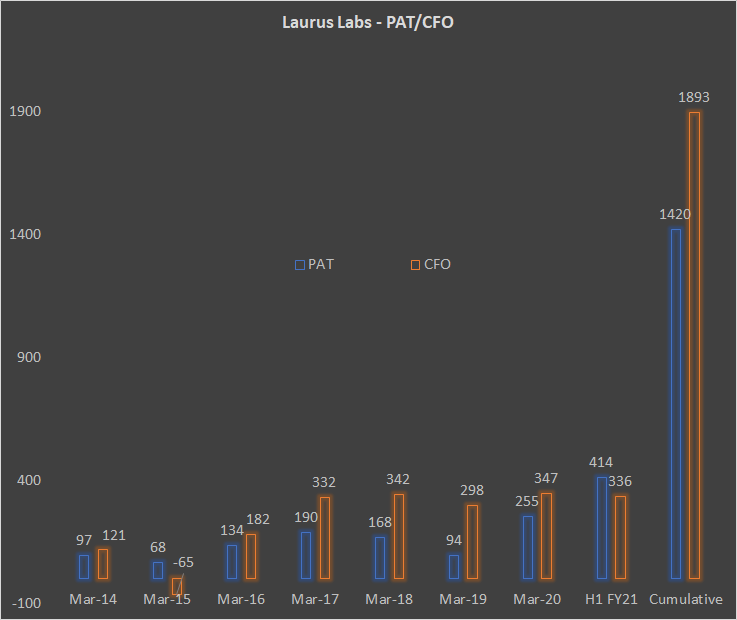
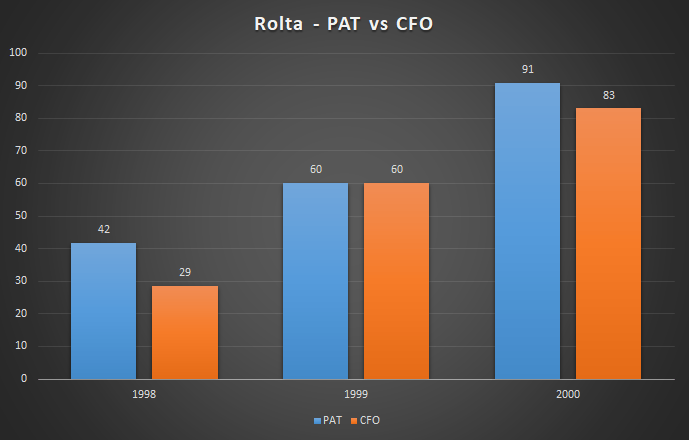
  • If we were to look at past patterns of fraudulent companies, one thing that stands out usually is CFO stays low in comparison to PAT. Again, this co. clears that hurdle without doubt.
  • Auditors would have flagged concerns about cash. After all, bank balances at the end of the year, are one of the easiest things to check, even for an untrained eye. And here we are talking about Deloitte, one of the reputed “big four” and not some mysterious unknown auditor.
image
  • Without cash balances there would be bounced cheques in the company’s current account. Any evidence of that? No.
  • There are smaller things like employees not getting paid on time, not getting increments, etc. I can’t get into those because I can’t find evidence on either side. And, absence of evidence does not necessarily mean evidence of absence. We’ll just have to wait for more evidence to come by.

All of the above points prove low cash levels are not a valid data point to look at, unless additional red flags show up in the future, that confirm the opposite view.

What could the plausible reasons for low cash in bank possibly be?

Imagine you own the only store selling daily necessities in a small town. Every year, your next door auditor sees more and more customers in your store. He decides to investigate if you are doing some hanky panky. He sees there is no cash in the cash box at the end of every year. There is no cash because you have paid salaries to your employees, paid back your suppliers / distributors for stuff you bought from them, paid the tax man, bought more merchandise so you can sell more next year, perhaps added another floor on top to accommodate all that extra merchandise, besides paying dividends to your partners.

Now, you have this next door banker friend who offers, hey Laurus, you can use my credit card (Cash Credit facility in Laurus’ case) whenever you are falling short of funds to repay any of your stakeholders. Laurus happily obliges, because his sales is growing at 26% whereas his return on equity is only about 15%. So he has to fund the scorching growth somehow.

The overdraft facility has been validated by the rating agency. I found this, thanks to a superb post on Valuepickr by somebody who worked in credit on banking side and has a better handle on this aspect. Here’s what he says.

Another thing to note is that this Valuepickr member is not invested and hence his opinion is more likely to be unbiased than not.

Instead of looking at one data point, one should look at the holistic picture because vested interests (perhaps) will torture numbers and get those numbers to confess anything. Why did the guy choose cash on the balance sheet instead of something like CFO to PAT or debt to equity, which is a much better indicator than actual cash itself? Because low cash was perhaps the only data point that confirmed his notion.

For those of you who already understand how Cash Credit facilities work, you may choose to skip the below video. In simple terms cash credit is a revolving credit facility given to companies by putting up inventories, receivables or assets as collateral. Co’s can use this to meet their working capital requirements whenever they are falling short of cash. Why is there no cash? Because all of it is being invested, back into the business.

With working capital loans, it doesn’t make sense to keep funds in your bank ac. Who in his right mind would keep cash in his bank ac and not pay back his lender asap, given the huge difference in interest rates between a loan and a bank ac?

In the quest to find red flags, sometimes we forget to see the green flags, thereby missing the forest for the trees. We also need to get on the other side of the fence sometimes and back up managements of companies that are executing well, and try to put in a good word and keep them motivated. A promoter who could have been relaxing in his farm house, chose not to do so and took most of his life’s savings and put them into his firm. He took risks and pursued growth. I don’t see why he would put so much at stake if he simply wanted to cook books. We should appreciate the fact that doing business in India is challenging indeed and despite all hiccups, and despite being called bogus, here’s a management team that just keeps executing.

Show me one multibagger out there which did not have a single red flag. Pharma co’s by their very nature (sometimes rightly so) keep investors worried all the time that they stay invested. Take Ajanta Pharma’s 120 bagger journey for example. Elsewhere, I have written about the gut wrenching roller coaster ride it’s investors had through their journey while experiencing the joy of a 120 bagger.

Does that mean we close our eyes? No. But we do need to separate the signal from the noise. Personally, I have a neutral view and would look out for more red flags, if any. Meanwhile I continue to stay invested.

PS: Ideas in this post have been collated from Twitter / Valuepickr / Whatsapp and based on my own personal investing experience. I have tried to put everything in one place to try and get a holistic picture. I sincerely thank everybody’s contributions / ideas.

I could be wrong on one or more ideas articulated above. I rank myself as moderate when it comes to doing forensic accounting and acknowledge there are much better forensics guys out there. I may change stance on this business as and when new facts present themselves or whenever I start looking at old facts in new light. And hence, I reserve the right to be wrong. The best thing to do for you would be to do your own due diligence and build your own conviction.

Barath Mukhi
4-Nov-2020

My Story

One of my uncles who I used to work for, back in my struggling days, said this a while back, when I told him I was doing well in the markets “Share bazaar juva hai. Sirf bade dalal isme paisa kamaa sakte hain.” (The share market is a gambler’s den. Only the big brokers can make money in this field.)

This line hit me like a train and has been stuck in my memory ever since.

Why do some Indians think the stock market is a gambler’s den? The latest movie on Harshad Mehta partly answers this question.

While watching this superb series, my uncle’s statement rang a bell and I thought the market was indeed rigged before the introduction of demat. Not to say, some stocks are not rigged today. They are.

Just that it may be impossible for anybody to move the market like Harshad or the bear cartel did, back in the 80s and 90s. And if one follows the rules of good investing, based on company fundamentals, more likely than not, will create wealth. All that is needed then is hard work, patience, integrity, determination, a head for numbers & business analysis.

Does the small investor really have a shot at competing against the biggies? I try to answer this question with the example of my own story and a snippet from Steve Jobs’ famous commencement speech. This statement is something that I always find fascinating. I just love listening to this video, every single time.

“Of course it was impossible to connect the dots looking forward when I was in college. But it was very, very clear looking backward 10 years later. Again, you can’t connect the dots looking forward; you can only connect them looking backward. So you have to trust that the dots will somehow connect in your future. You have to trust in something — your gut, destiny, life, karma, whatever. This approach has never let me down, and it has made all the difference in my life.”

Let me try to connect the dots now. My family moved to Bangalore in 1990, just when the big bull was locking his horns with the bear cartel in Mumbai. Dad, Mom, me and my 2 siblings. Dad suffered losses in his business within 2 years of moving here, and we went from being middle class to poor. Life was a struggle and there were times where we had to borrow money from reluctant relatives to pay electricity bills, school fees and so on. In my 5th standard, dad told me I couldn’t go for a 1 day school trip because he couldn’t afford 300 bucks. Yes, I still remember the amount, because as an eleven year old it was hard for me to digest that all my friends went on the trip, except me.

So after completing my 10th standard, in 1998, being the eldest of 3 siblings, I took up a job for 1700 bucks per month, with my uncle to make ends meet. He was old school and believed school won’t help me get through life. So to make ends meet, no money to pay college fees and the pressure from my uncle, I gave up and quit my education after my 12th, despite being a topper in my school.

Life’s struggles went on, and for 3-4 years I worked 2 jobs to support my 5 member family living in a one bedroom chawl. In 2004, there is this close friend of mine who landed a BPO job and started making 8 grands a month and here I was making just 4k a month after travelling 50-60 kms a day, by public transport, with no hope of a good future, if I was to continue with the same job.

Another issue was that I had previously borrowed at lower rates and lost 2 Lac rupees lending to some 8-10 borrowers at higher rates, without doing enough due diligence. Oh and that reminds me, diversification doesn’t help if the underlying investment sucks.

So with the pressure to make ends meet, with loans on my head and seeing my friend (another ex-struggler) I decided to get into a BPO job, in mid-2004.

Getting into a BPO would turn out to be harder and way more demotivating than I thought because whatever little English I had learnt in school, was gone because I was primarily speaking Kannada & Hindi for 4 years, in the job, in my uncle’s lending business.

In my first ever BPO interview, I could barely introduce myself. I was determined to get into BPOs so I could pull my family out of poverty. So the next 6 months I must have attended some 30-40 interviews, for various companies, at times almost giving up on the idea and saying to myself, “BPO isn’t for me. My spoken English is just too screwed up.”

But then, somehow I kept attending interviews, kept working on speaking English well, to a point where I could at least crack the interview. BPOs were booming in Bangalore, back then and under graduates like me were being hired left, right and center. Finally I got a call from a small time BPO and they offered me a salary of 8k per month. After finishing that call, I yelled “Yes”. This moment is something I remember vividly and will never forget. After many frustrating rejections, almost making it and being declined, I finally made it to a white collar job. Finally there was light at the end of the tunnel.

So after working in this small co. for 3-4 months, there was this colleague who said she was moving to a bigger technology co. I decided I wanted to get into this co. as well. Now, this was a technology giant whose interview I had already failed twice in the past. Anyway, this time due to an improvement in my English, due to 4 months of BPO experience, I cracked the interview with lesser effort.

So from 2004 to 2008 or 2009, life was good at this tech co. I finished my degree, repaid my debt and kept moving up the corporate ladder. And suddenly one fine day, getting bored in my office, doing a night shift, I googled “How to get rich” and after some browsing landed on a blog titled “MyJourneyToBillionaireClub.Com” written by a Gujarati dude. The blog was more like an Indian version of Rich Dad Poor Dad. I still have one of his PDFs, which has the below table.

So after reading multiple blogs, over the next few months, I inevitably read about Warren Buffett and further googling led me to Prof. Sanjay Bakshi, India’s best teacher on the topic of value investing.

And after a few years of reading his blogs, I learnt on Twitter that he was doing a workshop for small investors in Pune, in 2015. The course fee was 20k and I felt it was too expensive. Nevertheless, I went ahead and paid, so I could attend the workshop. Thankfully, I focused on the value this workshop was going to give me and not on the price.

At the workshop I was blown away by how generously this teacher shares his ideas. It also taught me that a lot of money can be made in the markets, ethically, if one works hard and has his eyes on the long term, rather than on the short term. Meeting your teacher in person has a motivational effect at an altogether different level.

Prof. Bakshi’s workshop June in 2015 was life changing for me

Another good thing that happened in the workshop was that I made a good lifelong friend, another blogger and an outstanding investor, who, a few years later motivated me to start writing blogs. And thanks to him, I came out of my shell, earlier this year and started sharing ideas I have learnt over the last decade.

Now, coming back to how you cannot connect dots forward, but only backwards, I wonder why I googled “How to get rich” that night, in my office? Maybe if I was born in some upper middle class family, I might NOT have searched that phrase. Or if I was one of those rich kids, I wouldn’t even be working in a job and would get through life without fire for success, in my belly. Just because I know what it is to be at zero, in life, I understand what it means when somebody loses his/her hard earned money, what it means to not have sufficient financial resources at one’s disposal. Thinking backwards I realize how these 2 dots (being poor in the past and googling that lucky phrase) connected and led me to my aha moment.

When I made that friend who I envied at that time, for getting that BPO job (we are still best friends btw and meet regularly), I did not know, some day, he would motivate me to get a job that would change the trajectory of my life. Meeting this friend in 2000 led me to a BPO job in 2004, which, in turn led me to Google on that fateful night, in 2009. There is no way I could have predicted this in 2000. Absolutely no way. Thinking backwards, all of this makes sense.

What would have happened if I hadn’t taken that girl’s suggestion and not attended the interview in the technology co.? I might not have had a job where I worked for 15 straight years. And worse I would not have googled my way to the world of equity markets, a world very different from the world of technology, a world I was familiar with opposed to equities about which I did not know crap. Without Google, I would not have reached where I have, today.

To give you a contrast, educated rich kids in my circle of friends still have naive idea about the markets and still have old school thoughts about the market being a casino, a lottery. In some sense it is. But then I have done well for my family from this very field, without “gambling”. I would classify making returns from companies like Nesco / Relaxo / Manappuram / Bajaj Finance in the past as anything but gambling. That I lost small sums in companies like Kitex, Sadhana Nitro Chem & Reliance Home Finance, is another story, which I will keep for another day.

What would have happened if I had decided 20k was too expensive for Prof.’s workshop? I would not have realized the impact hard work and creating win-win situations for the society we live in, makes in our own lives. I would not have realized, good karma comes back with compound interest (Prof. had tweeted this a few years back and this has stuck with me ever since)

Also, if I had decided not to pursue his workshop, I wouldn’t have made this investor friend, who motivated me to write, a few years later and this blog wouldn’t exist and I wouldn’t be doing all the serendipitous inbound networking, I am currently doing. When I started writing I hadn’t expected blogging would connect me to people who are so different than me and people whose assumptions I can help break.

The purpose of writing my story was to motivate small investors and tell them that they do have a real chance of creating wealth in the markets, over the long term. If somebody tells you, the market is a casino, tell them their thoughts are outdated and pretend to be deaf. India will go from being a $3 trillion economy to a $10 trillion economy (at least) in our lifetimes. In that space, there will be a lot of companies that will create wealth for their small (and big) investors. All we need to do is be prepared, continuously search for opportunities and bet big when the risk/reward equation is favourable. If I could do it, you can too.

-Barath Mukhi
-18th Oct 2020

Momentum investing strategies from The Next Apple

$10,000 invested in Apple in 2003 were worth about $1.5 Million in 2015.

In 2003, Apple was a $10 Billion co. Today it is worth a massive $1.8 Trillion. In the book, The Next Apple, the authors, Ivaylo Ivanhoff & Howard Lindzon, discuss ideas to find the next big winners, the next Apples of the world. Although, they discuss many factors, I will stick only to some points that I felt, formed the core of this book.

Despite some very scary recessions in financial history and gut wrenching volatility in stock prices, the market has consistently provided opportunities to invest in hundreds of stocks that went up 1000% or more.

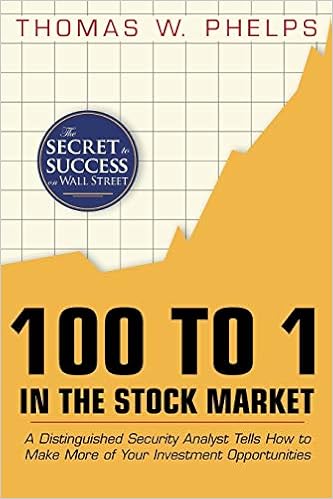
This was also the key lesson from the below book, a book that hit me like a train when I first read it a few years back.

Thomas Phelps convincingly argued, that between 1930s and 1970s, 365 American stocks went up a hundred fold. (You read that right, 365 stocks went up a 100x!!). And these were spread across a 40-50 year time period, which means there were a few stocks available every single year, which went up more than a 100x, over that time period. Just the names kept changing.

To quote some examples from the list, these were some stocks that went up a 100x across different time periods.

  • Anheuser Busch (Budweiser Beer) – 1935 to 1971
  • IBM – 1948 to 1971
  • Kodak – 1933 to 1971
  • Polaroid – 1955 to 1971
  • Development Corp. of America – 1967 to 1971
  • American Laboratories – 1964 to 1971

But what’s in it for us? Why is it important to study financial history? Because history is (sometimes) a reliable resource to make educated guesses about the future.

Mr. Buffett agrees.

30 Best Warren Buffet Quotes On Investments, Business & Life

What history tells us is that there are multi baggers in every single year. The good news is that over the next 10 years, in any 10 year period, there will be multiple stocks that will advance 10x, 50x, 100x or more.

Could Apple, become the next Apple, for us, the investors of today? If history is a guide, it’s very unlikely. As a co. becomes big, the law of big numbers catches up and co’s fail to maintain their growth rates. Fro any co. it is relatively easy double it’s customer base from a 100 customers to 200 customers than it is to go from 10 Crore customers to 20 Crore customers.

This means that the names of big winners change every 3 to 5 years, sometimes more often. But the good news is they take similar paths. Studying their identical patterns helps us in finding the next Apple, Infosys, Page Industries, Symphony, Titan or any other multi bagger stocks.

So how do we identify such stocks?

The author of The Next Apple rightly insists that the vast majority of big long term trends start with a breakout to new 52 week highs from a proper base, with each trend having varying underlying reasons. A proper base is something I am still working to figure out. But from the author’s description, seems like he means, 52 week highs with good volumes + consolidation.

Look at the 52 week high list

  • Look at the 52 week high list. It is often a shortcut to the minds of smart investors. It could also be a reflection of people’s ignorance and stupidity. It takes some practice to learn to how to use it properly.
  • Once you have identified a stock/sector from the 52 week high list, follow the thoughts of people with domain experience. You don’t need to know any people with domain experience personally in order to benefit from their wisdom as an investor. The beauty of the Internet and social media is that anyone has access to everyone’s brain for a marginal cost.

If you learn to do both, you are likely to catch quite a few of the biggest stock market winners.

The beauty of the stock market is that you don’t need to be the first or the original, to identify a trend. As the example of Apple & similar other stocks shows, you can be a bit late and still ride the trend by becoming a minority partner in wonderful, fast growing businesses.

Understand why the stock hit 52 week highs (52WH) or All Time Highs(ATH)

Now, hundreds of stocks hit 52 week highs every year. It doesn’t mean we go buy all of them. It means we become curious as to why a given stock hit a 52WH. If a trend is obvious (like the current pharma pack), and there is more steam left, then consider buying the stock. Hence, understanding the story behind the moves becomes critical.

Understanding the triggers behind a price move will give you the confidence to raise the stakes to meaningful levels.

“Sometimes, being a contrarian means staying with the trend.” – Steven Spencer

No one knows which ATH is the beginning or an end of a trend. No one knows how far or how long a trend could go.

Past performance could be an incredible source of investing ideas. Past performance, means 2 things:
1. Momentum – Stocks that outperformed in the past 3 to 12 months tend to continue to outperform in the next 3 to 12 months.
2. New 52WH – All long term stock market winners spend a considerable time on the 52WH list, if not the ATH list.

Why the 52 week high list is so important?

  1. We don’t want to be first. We want to be in stocks that move, and being on the 52WH list attracts a lot of attention.
  2. It is an important benchmark followed by many investors.
  3. You cannot make a cent before the market agrees with you. The market’s way of agreeing with you is sending your stock to the 52WH list.

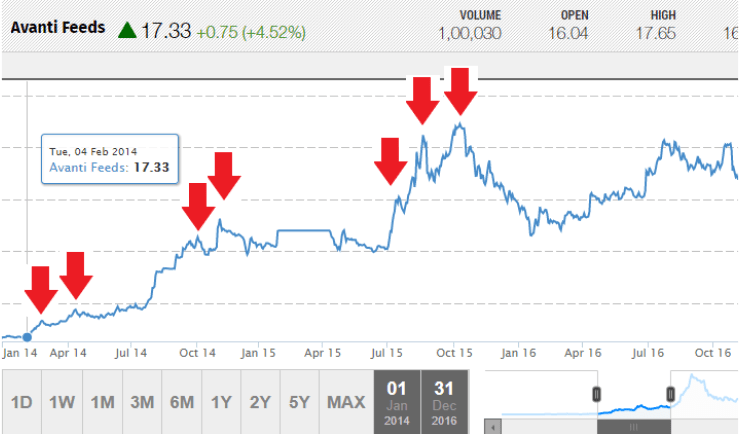
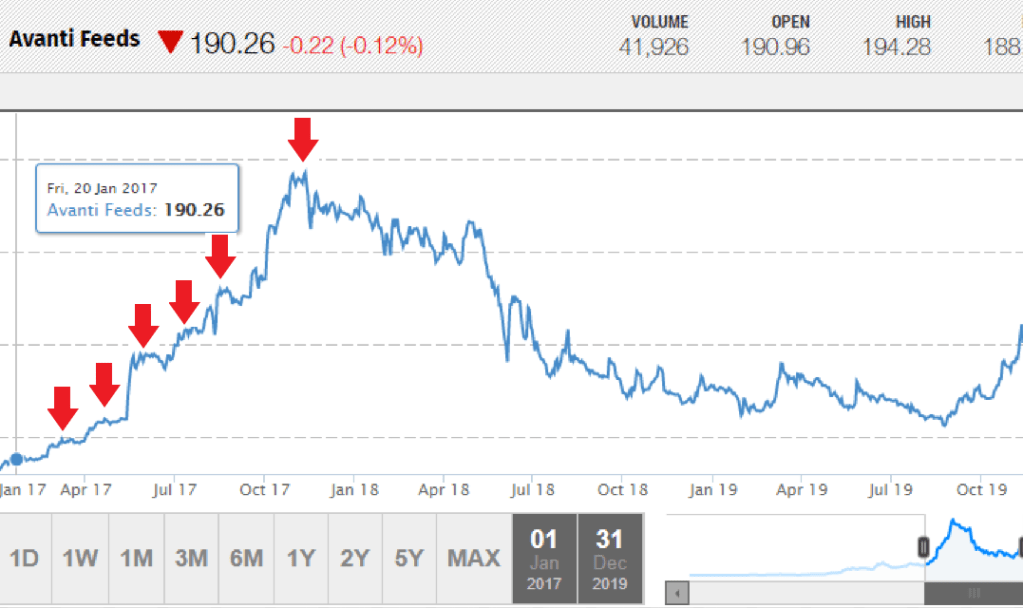
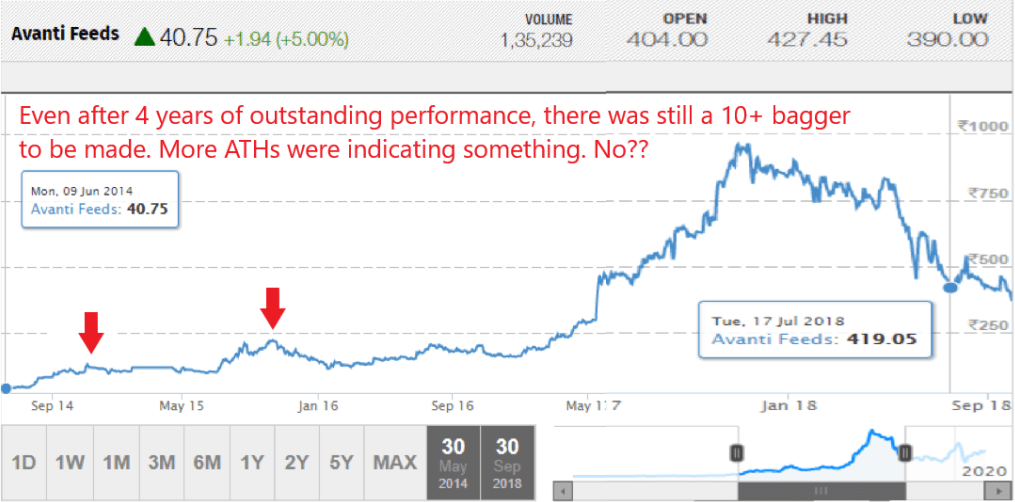
Take the example of Avanti Feeds, starting from March 2011, a stock which went from 3 bucks to 950 bucks, a 300+ bagger, at it’s peak in Oct 2017.

The arrows in the above charts show how many times this stock hit ATH, in it’s 300x journey.

Now you may ask why did this happen? What triggered the very first ATH in this stock?

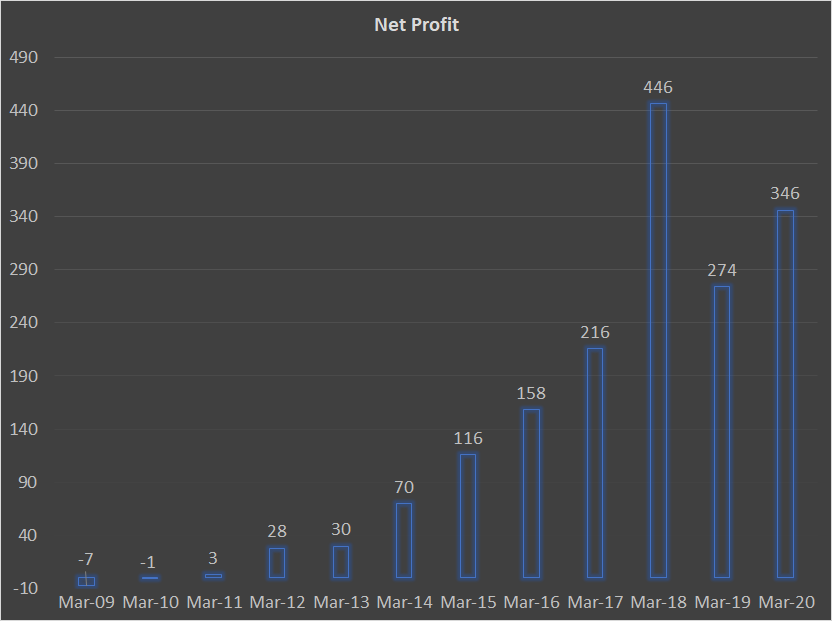
The answer is that the co. went from making a loss in 2010 to a fast grower. It’s profit zoomed like a rocket, thanks to all the tailwinds this shrimp feed business experienced.

Now even if one was late to the party by 4 years, and bought the stock a good 4 years later, in March 2014, he could have made a 10+ bagger (even after factoring the stock price crash in 2018.

Now, one could have validated the story from Avanti’s 2014 annual report and then taken a call. Despite the massive run up, the co. was still available at a market cap of 473 Crs, trading at 7 times FY 2014 earnings.

The same pattern played out in Ajanta Pharma.

Take the charts of any historical wealth creator and you’ll see the same pattern playing out. Multibaggers show up on the 52WH & ATH lists, time and again.

What about hindsight bias?

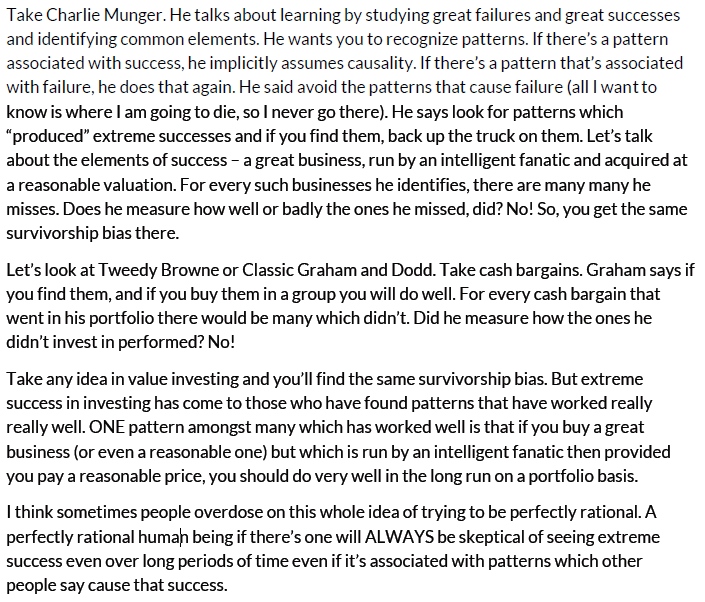
But isn’t all this hindsight bias and seem to be prone to judgemental errors? Prof. Bakshi once articulated nicely about how people overdose on being rational.

I think the point Prof. was trying to make was sometimes you have to decide whether you want to be rational or you want to be rich.

When it comes to learning from the past, it is ok to take a balanced approach and not overdose on hindsight and survivorship biases, while at the same time acknowledging the limitations of using historical data.

Should you go out and buy all the stocks on the 52WH or ATH list?

The answer is NO. But what it means is this should become your hunting ground for the next big winners in the market. It means you dig deeper into the catalysts that led to the stock showing up on that list. And if there are strong reasons to believe the story is likely to last a while, consider pulling the buy trigger.

When you’ve found out a good candidate amongst the 52WH list, other common sense rules of investing well, still apply. The main ones being business strength, management intelligence & integrity and buying growth & quality at a reasonable price.

Having a fundamental catalyst like a big earnings surprise behind a breakout to new 52WH improves substantially, the odds of finding a big winner.

What if you buy at the highest 52WH before the co. goes into oblivion?

Most trends last only a few quarters, but knowledgeable investors know how to take advantage of them and protect profits when the inevitable drawdowns come.

Assuming all other rules of common sense investing have been followed, if one still finds themselves in a falling stock, it is better to acknowledge his fault, cut losses quickly and move on to the next ATH or 52WH stock. At such times, it would be logical to follow the advice of the world’s smartest businessman.

Relative strength

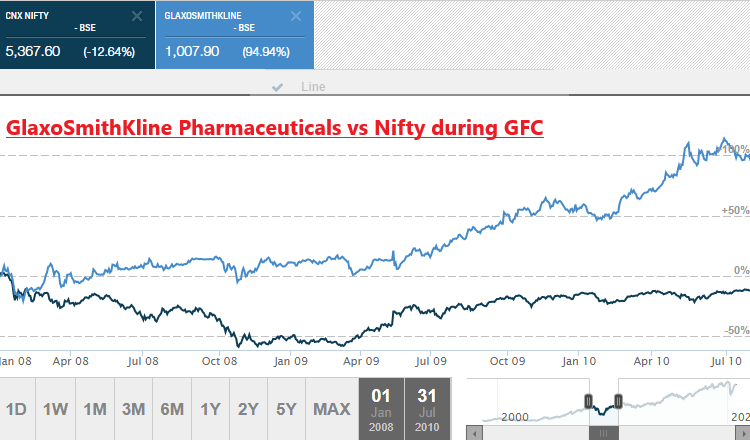
Another good idea in the book is that of relative strength. Particularly during market corrections, it is important to pay attention to stocks that exhibit relative strength. It is a simple concept. Look for stocks that go sideways, or even up, while the indexes bleed. Once the markets start recovering, these stocks tend to outperform.

The importance of this idea has been categorically highlighted by Ivan Hoff in Chapter 7 – “If you remember only one principle from this book, it should be the concept of relative strength.”

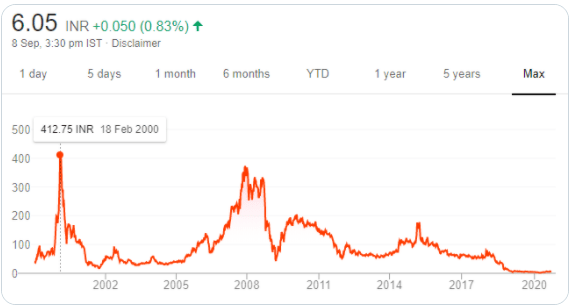
The below charts of Hero Motocorp, HUL & Glaxo speak for themselves.

Summary

  • 52WH and ATH lists are an all important tool for idea generation.
  • We cannot make a penny without Mr. Market agreeing with us and his way of agreeing with us it by sending our stocks to the 52WH & ATH lists.
  • Big winners are found in every single year, every single bull market and every single bear market.
  • All other rules of common sense investing still apply to buying at 52WH and ATHs.
  • Don’t overdo rationality. Understand the trade-offs between being rational and being rich.
  • Cutting losses rapidly is a given when buying 52WH stories. If gap downs happen, god help us.
  • Relative strength is another very good tool to have in an investor’s toolkit.

-Barath Mukhi
-29th Sep 2020

Lessons from a Dotcom Bubble stock – Rolta India

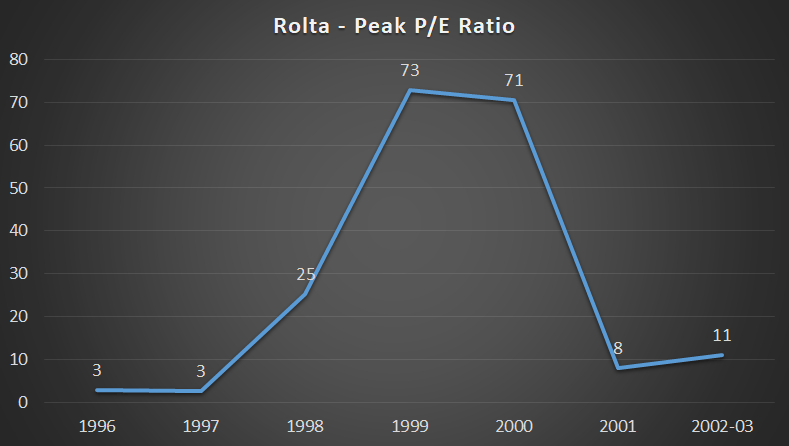
I saw a post on Twitter yesterday which showed investors lost Crores of rupees in this co. back in 2000/2001. It got me wondering what people might have been thinking while investing in this stock.

Let’s take a look at some stats for the co.

Revenues were rapidly growing.

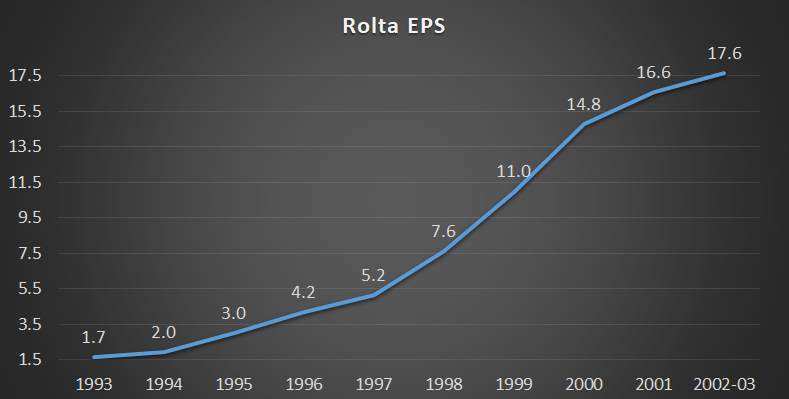
EPS was growing rapidly too. I have taken EPS instead of PAT because the co. issued new shares during this time period. Comparing EPS growth removes the effect of dilution.

When we see such numbers our mind puts an arrow at the end of the trend line. It doesn’t think “Hey that’s not normal. The normal is going to come.” But the normal does come.

Cash flows were reasonable as compared to PAT.

Return on Equity was high.

So what went wrong?

This went wrong. The investors’ expectations. The fear of losing money, got replaced with the fear of missing out. And that is an emotion we should not take lightly. The same emotions that affect other people’s judgements affect our very own. So, one should not think he/she is immune.

Until 1998, all was fine. And then all hell broke lose. Some people must have started thinking dotcoms are going to change the world. This time is different. But it wasn’t.

And the rest is history.

Lessons:

  • No matter how good the business or the management, at some price it becomes stupid to buy it.
  • What was once a growth stock became a bubble. The people inside the bubble probably didn’t know they were inside it. Every growth stock will seduce you into believing you are gonna be a millionaire. No, doesn’t work like that.
  • Growth helps only if we buy at reasonable valuations. Notice that the co. continued to grow even after the bubble burst. As Howard Marks has said, It’s not what you buy, it’s what you pay for it.
  • Sell discipline matters. What was once a 20 bagger stock (1996 to 2000), lost more than 80% of it’s valuation, the subsequent year. It’s not how much you make that counts, it’s how much of it you can take home.

– Barath Mukhi
9-Sep-2020

The roller coaster journey of a Pharma investor

Here’s a story of Ajanta Pharma, a business which created tremendous value for it’s shareholders between 2010 & 2016.

Buying & holding such a stock must be easy. If you are a little late for a 120 bagger party in a stock like Ajanta Pharma, just follow the strategy of buying at 52 week high prices and you should have the next big stock in your portfolio. Just buy and forget. Correct?

The above chart is full of hindsight bias. And I am here to tell you why.

Based on some 900 odd posts I read about the company, across this time period, below are the concerns, investors had with regards to buying or continuing to hold the company’s stock.

As we can see, people were full of concerns about this phenomenal wealth creator. Holding this stock, would have in no way, been easy. At 11-15 PE, in Aug 2012, Mr. Market thought, the re-rating was over. And this might have been a reasonable assumption to make, back then, given all the risks involved in the stocks of a Pharma co. Eventually, the stock hit 40+ PE.

Had the story played out differently, I wouldn’t be writing this post today.

Take-aways from this story:

  • Holding multibaggers (particularly in Pharma) is gut wrenching.
  • Do not invest in any Pharma co. without understanding the risks involved.
  • There will be long spells where you may question your thesis. You may have doubts in your head, making it difficult to hold. You may wonder whether you have invested in the right co. at all. This would be the time to go re-check your facts about the co. If your facts are supporting your thesis. just hang in there.

Barath Mukhi
29-Aug-2020

Will investors lose money by buying stocks of Alembic Pharma, Aarti Drugs & Laurus Labs?

Is the current rally in Pharma stocks like Alembic, Aarti & Laurus (current sector leaders & market favorites based on growth in sales & profits) being driven by supply chain disruptions due to Covid19 or is this a secular growth story we investors are looking at?

Will investors lose money yet again, chasing hot stocks of a sector, everybody’s talking about?

To the answer this question, lets look at the sales data for all 3 companies.

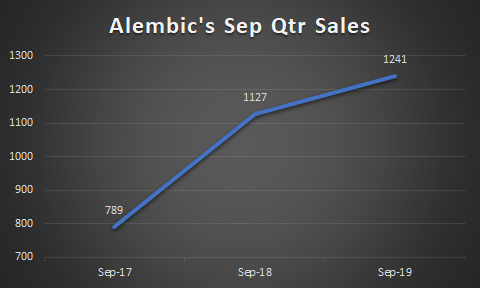
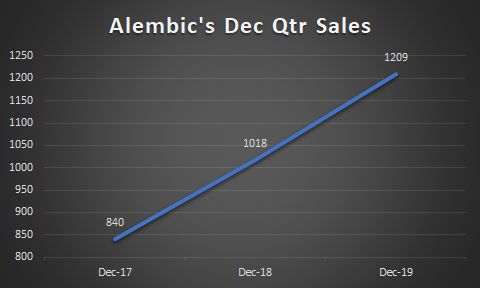
Alembic Pharma

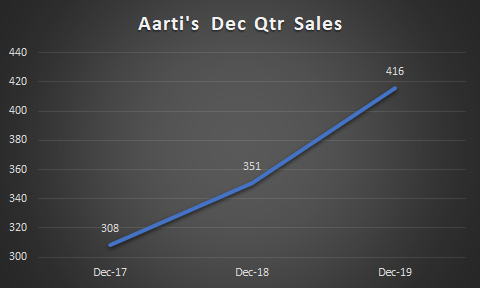
Aarti Drugs

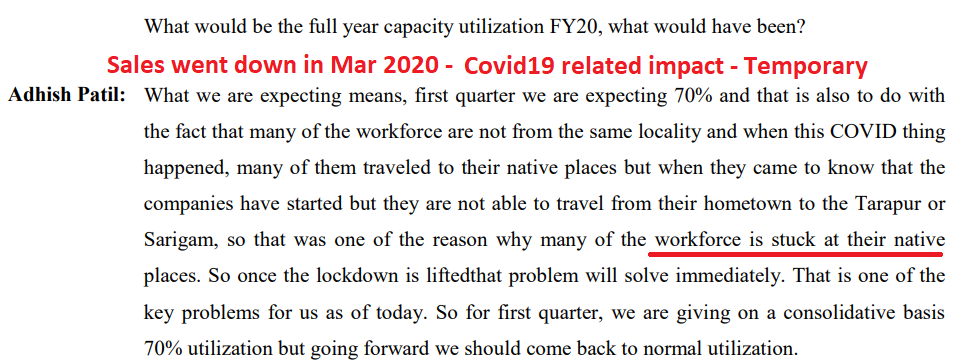
From Aarti’s Q4 FY2020 Concall

Laurus Labs

Conclusion

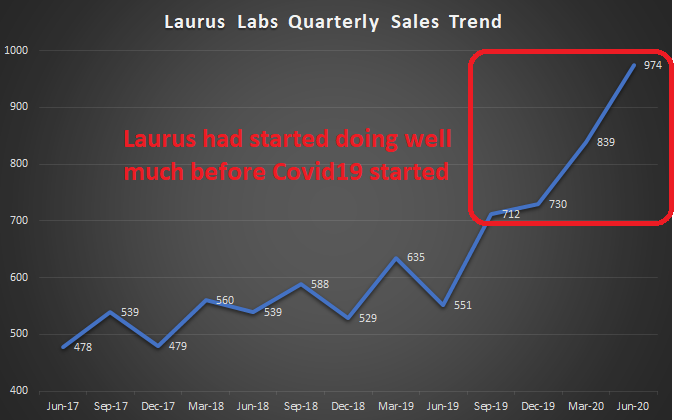
The consistent growth in quarterly sales of sector leaders from the API segment is suggesting that certain tailwinds are helping the API sector (Laurus & Aarti), and this is more likely to be a long term trend rather than a one-off jump in performance due to Covid19 disruption. As the above charts depict, both Aarti & Laurus started doing well, at least 2 quarters before Covid19 disrupted API supplies.

Meanwhile, Alembic started doing well (Most of Alembic’s sales come from Generic drug exports), due to it’s focus on R&D and strategizing well, much before Covid19 tailwinds came by.

I believe, (and could be wrong), all 3 companies are likely to do well over the short to medium term because of the reasons mentioned above.

Disclosure – I and my clients have substantial positions in Alembic Pharma and Laurus Labs and my views are certainly biased. As of 19th August 2020, I do not have a position in Aarti Drugs. This blog is not to be construed as an investment advice. Please consult your investment advisor before investing.

Disclaimer: This is NOT investment buy/sell/hold advise. I am not SEBI registered. May change stance on above businesses anytime with new developments and/or new insights, and/or overall market conditions. May NOT be able to update periodically. Please do your own diligence and/or take professional advise, before investing.

-Barath Mukhi

-19-Aug-2020

Should you be worried about Pledged Shares & a lack of Free Cash Flows in Laurus Labs?

Firstly, I have been invested Laurus Labs since 600 odd levels and added more on the day this company declared Q1 FY2021 Results. Currently this co. forms a little over 10% of my portfolio.

Here’s how I thought about the company before investing.

Firstly, sales had been growing well.

I love straight lines, particularly the ones that are goin’ up and indicating there’s something nice cooking there.

Q1 FY2021 Revenue sources

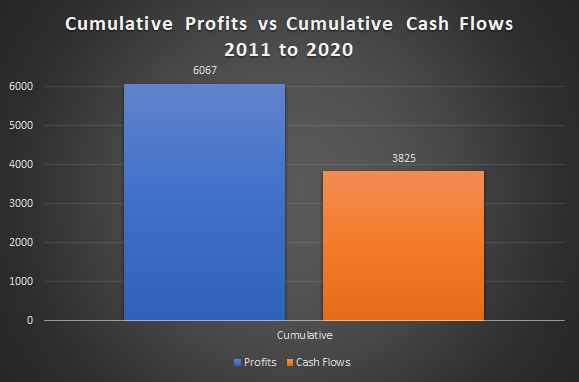
Cumulative cash flows vs Cumulative profits are good.

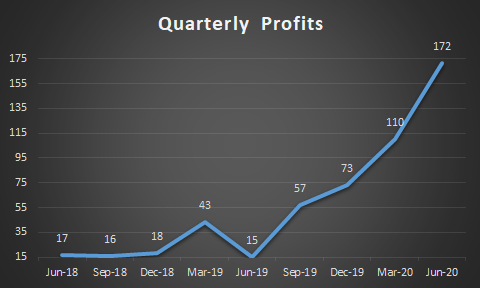
Quarterly Sales were showing a nice uptrend. The co. had been on my radar since Mar 2020 because it had shown 2 quarters of growth in sales as well as Profits. In retrospect, I could have bought it a little earlier.

Anyway, the below increase in sales and profits should be seen in the context of the current Covid19 situation where every other business is struggling.

But see what was happening here, at Laurus.

5 quarters of increasing sales and profits in an environment where lockdowns and job losses are the norm, at least temporarily. Wow!

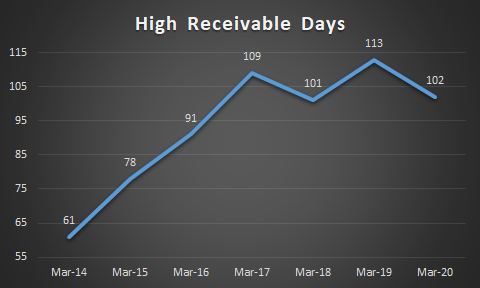
What got me worried though, was the trend in receivable days. Almost a third of the companies sales are being done on credit and not cash.

So, I came across a superb thought by another investor who said, receivables in the pharma sector usually don’t end up being bad debts and write offs because transactions between the seller and the buyer are usually over several years and customers are likely to be dependent on Laurus for future supplies. A data point to validate this would be the company’s sales growth. So there seems to be good demand for the company’s products and write offs seem unlikely.

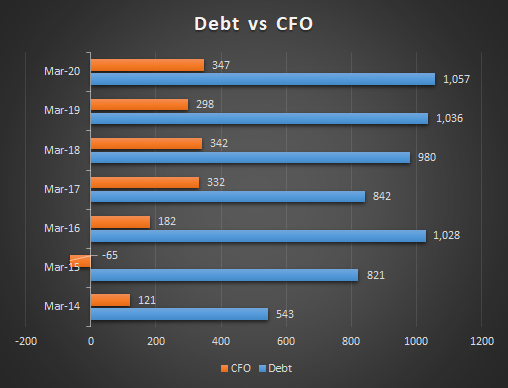
High debt

Debt is 3 times cash flows generated by the co. If good times continue, then the co. may be able to pay off their debt in due time.

Debt to Equity at 0.6x. The cost of debt as per the company’s latest concall is 6.6% which provides some comfort because it is way lower than the Return on Equity of 15% delivered by the co. in FY 2020. And this ROE was delivered despite a significant amount spent on Capex.

Free Cash Flows – From the company’s FY2020 Annual Report

Changing Revenue Mix

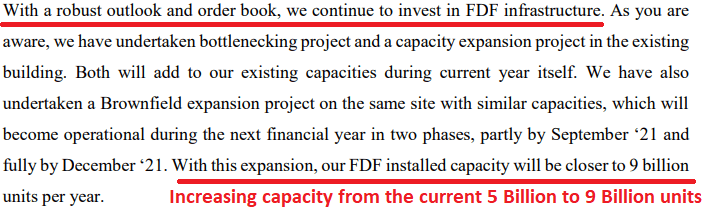
Booming Generic Finished Dosage Forms Business (FDF)

In Q1 FY 2021 alone, the company’s Generic FDF division delivered sales of 351 Crs compared to 46 Crs in all of FY 2019 and just 6 Crs in all of FY 2018.

Growth expected to continue in FDF as per Q1 FY2021 Concall

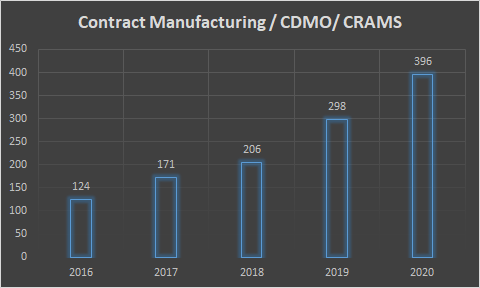
Booming Contract Manufacturing / CDMO / CRAMS Business

Growth in CRAMS expected to continue as per Q1 FY2021 Concall

Pledged Shares

There are concerns that promoters have pledged shares and this combined with the fact that this co. is based out of Hyderabad (rings a bell, fellow investors?) seems to make a lethal combination. Doesn’t it?

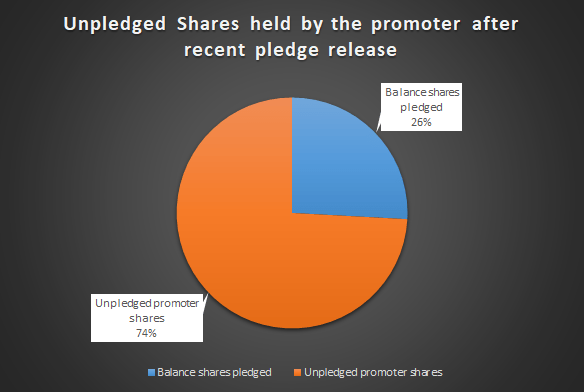
So as per a recent disclosure the 3 promoters who have a cumulative 1 Cr shares pledged out of their total holding of 3 Cr shares, recently got 25 lac shares released from Axis Finance Ltd.

The below graph shows the 3 promoters still own a lot of unpledged shares in the company. Besides, promoters of fast growing manufacturing companies are often expected by lenders to pledge shares to ensure skin in the game. So the promoters pledged a third of their stake to do capex and grow the business, which is fine, in my view.

I bought the stock at a little below 20 times FY20 earnings. For a fast growing co. with a reasonable ROE of 15%, and with tailwinds due to global supply chain disruptions, this is an attractive valuation in my view.

Free Cash Flow vs Growth

Some investors recently raised a red flag about the company lacking free cash flows, on Twitter. This is the typical debate that occurs between a value investor and a growth investor.

Growth investors want the co. to keep reinvesting as long as there are good opportunities for high return on capital growth.

On the other hand some value investors look for companies with cash on their books. I counter that by saying that the markets reward companies that can reinvest all that money and keep the ROE above the critical threshold of say, 15%. Mr. Market doesn’t like companies keeping cash in the bank and I have a ton of such examples.

Promoters

Day to day affairs of the co. seem to be headed by Dr. Satyanarayana Chava. He started the co. in 2007 by investing Rs. 60 Crores of his own money.

Dr.Satyanarayana Chava, @Economist India Summit 2017

It is a phenomenal achievement to have reached 3000 Crs + Revenue in a span of 13 years. So, the gentleman certainly knows what he’s doing. In the past, he was the COO of Matrix Laboratories and has a few decades of experience in the Pharma industry. It always excites me to partner with first generation businessmen who’ve come up the ladder despite all the challenges they might have faced in their entrepreneurial journey.

Risks

  • Around 15 to 20 Crs out of Q1 FY2021 profit of 172 Crs came from Forex gains. So Forex gains contributed about 10-11% of last quarter’s PAT. This may or may not continue depending upon currency movements.
  • Increase in interest rates could lead to pressure on margins, if debt is not reduced.
  • If demand tapers off, then Capex cost may not translate into profits.
  • Who succeeds Dr. Chava in the future will decide the growth trajectory of this co. whenever the time comes from him to step down.

Disclosure – I and my clients have substantial positions in this company and my views are certainly biased. This blog is not to be construed as an investment advice. Please consult your investment advisor before investing.

Disclaimer: This is NOT investment buy/sell/hold advise. I am not SEBI registered. May change stance on above business anytime with new developments and/or new insights, and/or overall market conditions. May NOT be able to update periodically. Please do your own diligence and/or take professional advise, before investing.

Barath Mukhi

5th August 2020

Why Mr. Market did not react to Donald Trump’s Executive order on Pharma Imports?

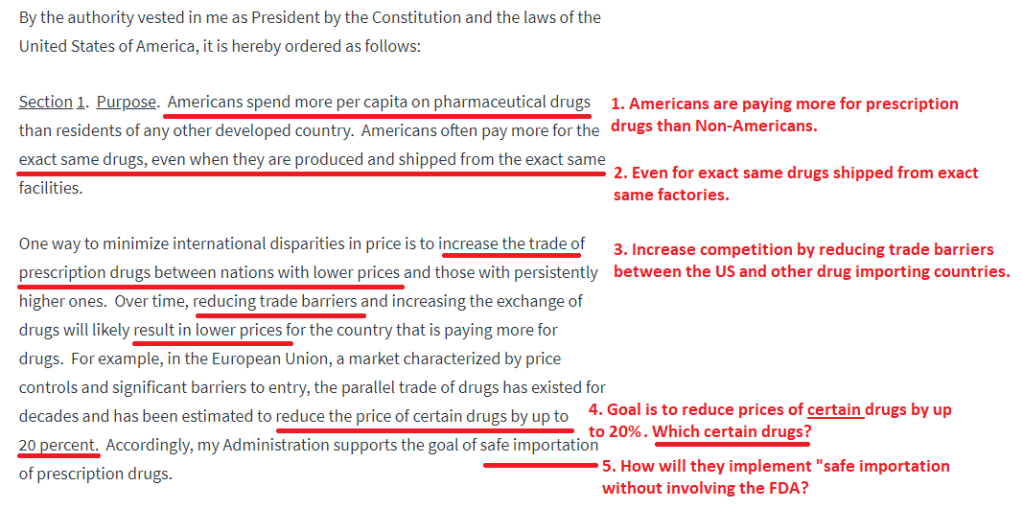
On July 24th, the US president, Mr. Donald Trump, issued 4 executive orders to rein in prices that US consumers pay for over the counter drugs.

So let’s try to decipher what the official order from White House says.

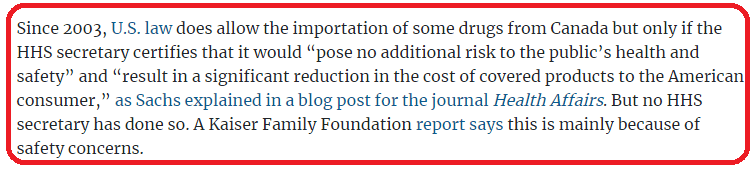
Hey the law is not new! It exists since 2003!!

Why has no Health Secretary certified an imported drug in 16 years?

Perhaps, one of the answers to the above question lies deeply rooted in human psychology. Enter loss aversion. The idea of loss aversion is that humans are twice as likely to avoid losses than seek a similar quantity of gains.

Now, let’s suppose the Secretary of Health and Human Services, decides to import a critical life saving cancer drug from Canada. Everything goes smoothly until say, a few months down the road. A few patients who took a particular batch of those imported drugs, see their medical condition deteriorate or worse the bad batch of drugs leads to fatalities, then who takes the blame? The Secretary, his audit team or the President himself? The Secretary, the guy, who needs to make the critical decision of whether or not to allow an imported drug to enter the US could possibly be worried about a risk to his reputation. If importing drugs leads to a bad outcome, he could potentially lose his job, he could be all over the news, for the wrong reasons, he may have to face lawsuits or have to deal with the emotional trauma of facing the victims’ families. Maybe that is why no Secretary ever authorized this in 16 years and thought I’ll let it be? All that loss is just not worth it. Maybe, just maybe.

The situation could get even worse for the Secretary, in case the new President who potentially replaces Trump in Nov 2020 is from an opposition party.

Conclusion: The law is very nice to hear but perhaps very hard to implement, particularly so for the guy who needs to sign the import papers. That being said, it is still an important risk for Indian Pharma exporters because the President will still try to get this implement because his own incentives are tied to this executive order (The upcoming Presidential elections due in Nov 2020). In the eyes of at least some people, he will be a hero who got a long standing law practically executed. Meanwhile, Mr. Market could get nervous about this order and result in wild swings in stock prices of his current darling, the Pharma sector.

Barath Mukhi

4th August 2020.

Alkem Labs – Upcoming Opportunity

19th July 2020
Alkem Labs seems to be an upcoming investment opportunity in Pharma, a sector which has tailwinds in it’s favor, during the ongoing Covid19 situation. Here are my thoughts on why this company could turn out to be an interesting investment candidate.

Sales from various businesses in FY2020

The company’s Domestic as well as US businesses demonstrated good sales growth in FY2020.

FY2020 Sales growth in various segments
Consistent growth in domestic as well as export portfolios

Overall sales trends over the years

PAT trends over the years

So, one may observe profits went down from 892 Crs in FY17 to 631 Crs in FY18. Let’s dig into why there was a drop of 261 Crs in FY18 despite Sales going up that year.

Snippet from the company’s FY2018 Annual Report

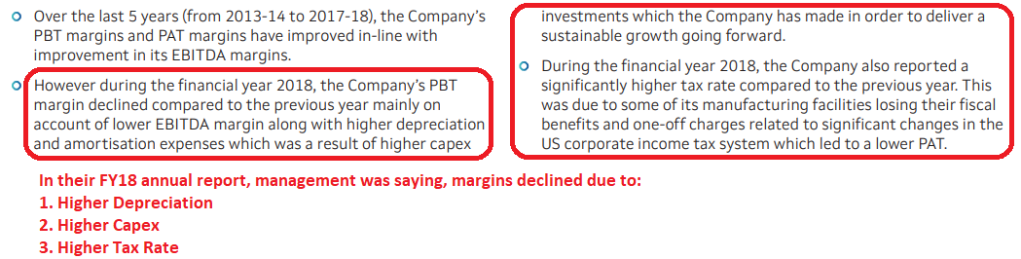
The company’s 2018 Annual report does show that their Tax expense increased from 60 Crs in 2017 to 287 Crs, an increase of 227 Crs. This tells us that a good chunk of the drop in profits was due to the increase in taxes.

Return on Equity – A good return on equity is at least twice the current AAA bond yield. Why? Because, over the long term, return from an equity share almost always equals the ROE delivered by the company. In the short to medium term though, PE expansion can deliver much more than ROE. So, if you are taking all those risks attached to equity investments, and you are investing for the long term, you should at least be demanding twice the risk-free return offered by government bonds. The current bond yield in India is about 6% & twice that would be 12%, which is the benchmark ROE one should look at.

Risks

Credit sales for Alkem are on the rise. This is particularly critical for domestic focused companies like Alkem because the laws pertaining to collecting dues in India aren’t perceived to be as easy as collecting dues from customers based in developed countries, where the laws are more stringent.

The company isn’t very good at converting profits into cash flows.

Let’s take a look at the Cash Flow Statement for FY2020

So as we can see, 21% of the company’s FY2020 profits went to receivables, 12% went to loans given and 23% went to inventories, resulting in profits not getting converted to cash flows. Just 52% of the company’s PAT was converted to cash and that’s not good.

The company’s FY2020 annual report offers some insights into their current status of receivables.
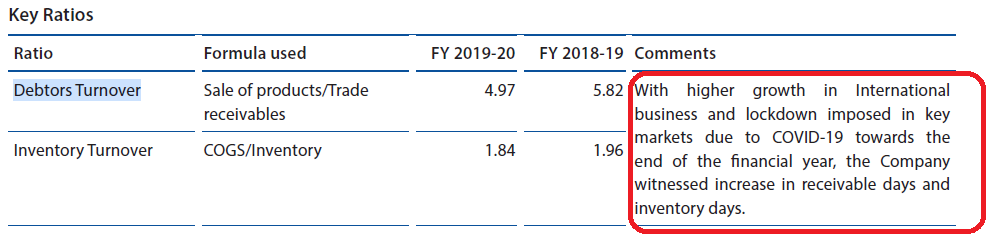
The company’s FY2020 annual report also states the potential impact of Covid19 on further issues with their cash collections (Increase in receivables from customers as well as a pile up of inventories in their warehouses)

The Case for high receivables
Now, one of the investors I highly respect, mentioned this recently – “Receivables in pharma sector usually don’t end up being bad debts and write offs because the relationships between the company and its clients are multi year and hence there is a lot of inter dependence.”

Conclusion
The company has been growing really well in both, domestic as well as international businesses along with a good return on equity.

Key surveillance items

  1. Receivables may further go up due to the impact of Covid19
  2. Domestic sales may get impacted due to the company’s sales team not being able to meet doctors
  3. Inventories pile up because of point # 2, further impairing the company’s working capital position, at least temporarily

Disclosure – No positions in this stock as of writing this blog. This is NOT investment buy/sell/hold advise. I am not SEBI registered. May change stance on above business anytime with new developments and/or new insights, and/or overall market conditions. May NOT be able to update periodically. Please do your own diligence and/or take professional advise, before investing.

-Barath Mukhi